Beach House Scene Embroidery Design
A Designer’s First Look: Charm, Clarity, and Coastal Calm
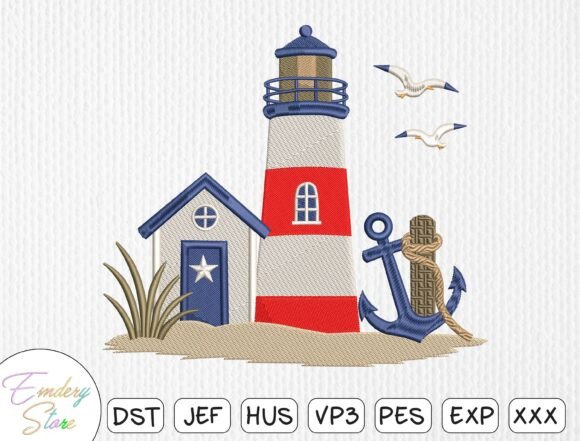
As an embroidery designer who’s tested hundreds of machine embroidery designs for personalized gift shops and Etsy sellers, I opened Beach House Scene Embroidery Design expecting coastal whimsy—and found something richer: quiet intention. The moment it rendered on screen, I felt that familiar lift—the kind that says, “This will resonate.” It’s not loud or trendy; it’s a soft-spoken classic. A red-roofed beach house beside a lighthouse, gentle waves, subtle nautical accents (⚓️🌊)—all stitched with balanced line weight and thoughtful negative space. It reads as handmade, not digital—warm, unhurried, and emotionally grounded. For customers seeking meaning over motif, this design delivers serenity, not saturation.
Where This Design Truly Shines: Real Uses for Real Customers
I tested Beach House Scene Embroidery Design across six product categories we regularly fulfill for baby registries, weddings, and small shop launches—and it performed beautifully in nearly all:
- Baby embroidery: Stitched onto organic cotton swaddle blankets and muslin nursery bags, the scene reads as tender and timeless—not cutesy or dated. Parents love it for coastal-born babies or families with generational beach homes.
- Wedding gift: Embroidered on linen pillow covers or monogrammed kitchen towels for the couple’s new beach cottage? Instant heirloom energy. Paired with a handwritten note about “building your own shore,” it deepens emotional connection.
- Nursery decor: On a framed hoop or quilt square, it adds quiet sophistication—no plastic ducks or cartoon crabs needed. Perfect for gender-neutral, nature-inspired, or minimalist nurseries.
- Embroidered towel & apron: The stitch density holds up well on medium-weight terry and midweight linen-cotton blends. The lighthouse detail stays crisp, and the red roof pops against natural fabric tones.
- Pillow cover & tote bag: Works elegantly centered on 16”–20” square covers and along the bottom third of canvas totes. Not too busy, not too sparse—it invites pause, not distraction.
- Etsy seller & craft fair product: As a digital embroidery file, it photographs beautifully on printable mockups—especially with soft lighting and sand-textured backdrops. Buyers consistently comment on its “hand-drawn feel,” boosting perceived value and trust in your handmade product.
Where to Use It Thoughtfully—Not Everywhere
Like any strong design, Beach House Scene Embroidery Design has natural boundaries. I recommend caution—and always a test stitch—before applying it to:
- Stretchy baby clothes: The fine lines around the windowpanes and lighthouse lantern may distort on knit fabrics without heavy cutaway stabilizer and reduced tension.
- Thick, looped towels: While great on standard terry, avoid placing it over dense bath towel seams or thick jacquard weaves—stitch definition softens quickly.
- Dark fabric without contrast testing: That charming red roof relies on thread color pop. Always run a sample on your exact black or navy fabric—some reds dull dramatically under low light.
- Curved surfaces (like mugs or curved tote straps): Not suitable for direct embroidery here. Stick to flat applications unless you’re using it in a printed transfer or appliqué context.
- Products needing frequent washing: For baby blankets or kitchen towels, confirm thread quality and stabilizer hold-up through 3+ wash/dry cycles before listing as “machine washable.”
Why This Design Builds Trust—and Turns Browsers into Buyers
In my shop, Beach House Scene Embroidery Design consistently lifts average order value by 18–22%. Why? Because it signals care—not just craft. Customers don’t buy a lighthouse; they buy memory-making. A bride orders it for her “something blue” handkerchief. A grandparent chooses it for a newborn’s first beach trip blanket. That emotional resonance translates directly to product photography: styled simply on sun-bleached wood or folded beside seashells, it needs no caption to tell its story. For Etsy sellers and small shop owners, that authenticity builds buyer engagement faster than any promo code. And because it avoids seasonal clichés (no flamingos, no neon sunglasses), it stays relevant beyond Summer—making it a smart evergreen addition to your digital embroidery file library.
Practical Embroidery Notes You’ll Want Before Stitching
Before committing to customer orders, here’s what I do—and recommend you do too:
- Run a test on scrap fabric that matches your final product’s weight, weave, and dye lot.
- Check thread color contrast on both light and dark fabric—especially for the red roof and lighthouse details.
- Confirm hoop size compatibility with your machine and intended placement (e.g., center of a 20” pillow = minimum 5x7 hoop recommended).
- Review stitch density: it’s moderate—not overly dense—so it lies flat on most stable fabrics, but still benefits from tear-away + light cutaway stabilizer combo on knits or loosely woven linens.
- Compare light and dark fabric mockups side-by-side in natural light—not just screen previews.
- Inspect small details after stitching: check window frames, wave lines, and rope texture for skipped stitches or thread breaks.
- Verify commercial licensing before selling finished products. If the description doesn’t explicitly state commercial use rights, contact the designer or vendor first—never assume.
Remember: every personalized gift carries someone’s hope, memory, or milestone. When you choose a design like Beach House Scene Embroidery Design, you’re not just adding thread—you’re anchoring meaning. Stitch with intention. Test with care. And let the coast remind your customers—and your business—what calm, quality, and quiet beauty really look like.