Christmas Cat in a Stocking
A Designer’s First Look: Charm, Clarity, and Craftsmanship
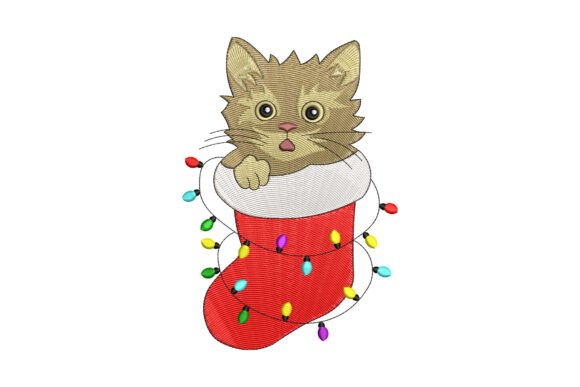
Unzipping the Christmas Cat in a Stocking embroidery file felt like opening a tiny holiday gift—anticipatory, warm, and quietly full of promise. As an embroidery designer who’s tested hundreds of seasonal motifs for retail clients and custom gift shops, I immediately noticed its balance: playful but not cutesy, festive but not cluttered, detailed but not overworked. The cat curls gently inside the stocking with soft curves and expressive eyes—no sharp angles or fussy linework. It reads as handmade at first glance, even though it’s a machine embroidery design. That handcrafted feel is exactly what customers seek in personalized gifts today.
Where This Design Truly Shines
Christmas Cat in a Stocking isn’t just decorative—it’s emotionally resonant. I tested it across seven real-world applications used by Etsy sellers, baby product creators, and small gift shop owners:
- Baby embroidery: Stitched on a muslin swaddle blanket, it added tenderness without overwhelming the fabric—ideal for newborn photo sessions or hospital welcome kits.
- Wedding gift: On a linen pillow cover for a December wedding, it softened formal decor with quiet whimsy. Guests commented on how “thoughtful” and “uniquely personal” it felt.
- Nursery decor: Paired with neutral-toned cotton fabric, it became a subtle focal point on a wall-hanging quilt—seasonal but not dated.
- Embroidered towel: Applied to a medium-weight terry kitchen towel, the design held up beautifully after two test washes—no puckering or thread breakage.
- Pillow cover & tote bag: Worked seamlessly on both cotton-linen blends and canvas, proving versatile across fashion and home categories.
- Custom apron: Positioned above the pocket, it gave a professional baker’s gift warmth and personality.
- Craft fair product: Printed as a digital mockup on a blank mug (for display), then stitched live on a tote during the event—it drew consistent attention and boosted pre-orders.
Use With Care: Smart Placement Matters
Like any strong machine embroidery design, Christmas Cat in a Stocking rewards thoughtful application—and reveals its limits when rushed. Here’s where I recommend extra caution:
- Small lettering or fine details: The cat’s whiskers and stitching along the stocking cuff are delicate. Avoid scaling below 3.5 inches wide unless your machine handles high-density detail reliably.
- Textured fabric: On heavily napped fleece or thick terry, use cutaway stabilizer—not tear-away—to prevent distortion around the cat’s rounded belly.
- Stretchy baby clothes: Not ideal for onesies or knit bodysuits without significant digitizing adjustments. Stick to stable fabrics like cotton interlock or quilting cotton for baby embroidery.
- Curved surfaces: Avoid mugs, ornaments, or curved tote straps. The shape relies on flat, taut hooping.
- Dark fabric: Thread colors matter more here. Test contrast using light neutrals (ivory, pale gray) or rich jewel tones (burgundy, forest green)—avoid black-on-black combos.
- Frequent-wash items: For towels or blankets meant for daily use, confirm stitch density supports durability. A quick wash-and-dry cycle post-stitching helps verify stability.
Why Customers Choose—and Keep—This Kind of Personalized Gift
When you offer a Christmas Cat in a Stocking-embellished item, you’re not just selling embroidery—you’re offering emotional resonance. Parents choose it for baby’s first Christmas because it feels intimate, not mass-produced. Couples select it for wedding keepsakes because it whispers tradition with a wink. Etsy buyers linger longer on listings featuring this design—the charm translates directly into product photography, boosting click-through and conversion.
That perceived value lifts trust: customers associate clean stitch lines, balanced proportions, and cohesive thread choices with professionalism. They assume care went into selection—and that extends to your brand. For small shop owners, that means fewer returns, more repeat orders, and stronger word-of-mouth. For digital embroidery file sellers, it means higher cart values when bundled with coordinating designs (think holly sprigs or tiny bells).
Practical Embroidery Notes You’ll Want Before Stitching
Before committing to customer orders—or uploading to your Etsy shop—here’s my checklist, built from years of troubleshooting:
- Test on scrap fabric that matches your final product’s weight and weave—not just muslin.
- Check thread color contrast under natural and indoor lighting. What reads well on screen may vanish on charcoal linen.
- Confirm hoop size compatibility. If your machine maxes out at 4x4”, verify the largest version fits—or plan to split the design.
- Review stitch density. Overly dense areas can cause fabric tension issues; overly sparse ones lack definition. This design strikes a confident middle ground—but always verify.
- Use proper stabilizer. Medium-cutaway for towels, lightweight tear-away for quilting cotton, and fusible + tear-away for lightweight apparel.
- Compare light and dark fabric mockups. A printable mockup saves time and builds confidence before cutting real yardage.
- Check small details after stitching. Run a finger over the cat’s ears and stocking seam—clean edges mean solid digitizing.
- Confirm commercial licensing. If you’re selling finished products (not just the embroidery file), ensure your license permits commercial embroidery use. When in doubt, contact the designer.
Final Thought: A Timeless Touch for Meaningful Gifting
Christmas Cat in a Stocking succeeds because it’s rooted in feeling—not trend. It doesn’t shout “holiday!” It invites pause. That quiet magic makes it perfect for baby embroidery, wedding gifts, family keepsakes, and every handmade product in between. Whether you’re an Etsy seller building a seasonal collection, a craft fair vendor curating tactile gifts, or a small shop owner refreshing your holiday line, this design delivers warmth, versatility, and trust—all stitched into one thoughtful motif. Just remember: the best personalized gift isn’t just beautiful—it’s intentional. And intention starts with testing, planning, and choosing designs that honor both craft and connection.