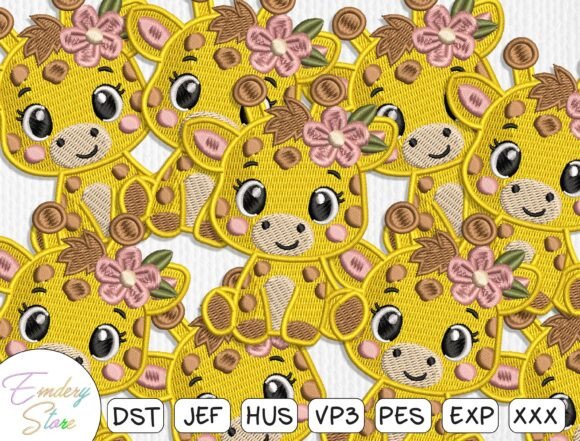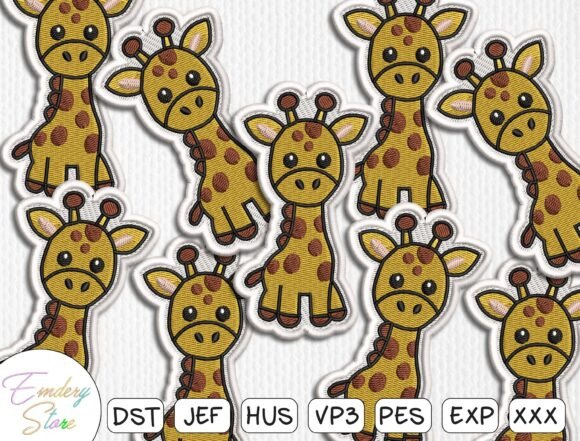
Cute Giraffe Patches Embroidery Design
First Impression: Playful, Approachable, and Instantly Recognizable
As an embroidery designer who’s prepped over 200 craft fair booths, my gut reaction to Cute Giraffe Patches Embroidery Design is immediate: this is a smile-getter. It reads as warm, friendly, and undeniably cute—not cutesy in a fleeting trend way, but with timeless baby-animal charm. The “Reach for the stars” tagline and 🦒✨ emoji hint at whimsy and gentle aspiration—perfect for baby gifts, nursery items, or lighthearted handmade products. It lands somewhere between modern farmhouse and soft contemporary: not too rustic, not too minimal, and absolutely not clinical or stiff. That balance is gold at craft fairs, where shoppers scan tables in under three seconds.
Where It Shines on Real Craft Fair Products
Tote bags: A medium-sized Cute Giraffe Patches Embroidery Design centered on the front of a natural canvas or oatmeal linen tote reads beautifully—large enough to catch eyes from six feet away, yet refined enough to avoid looking cartoonish. Pair it with subtle cross-stitch accents or a tiny star motif nearby for cohesion.
Aprons and tea towel embroidery: This design scales down gracefully. At 3.5–4 inches tall, it fits perfectly above a pocket or corner of a striped apron or flour-sack tea towel. Its clean silhouette holds up against fabric texture—no lost details in terry loops or slubbed linen.
Embroidered patches: Yes—this is where Cute Giraffe Patches Embroidery Design truly earns its name. As a standalone patch (with merrowed or satin-stitched edge), it becomes a versatile, giftable product: sew-on or iron-on options both work. Customers love grabbing a set of three for kids’ backpacks or denim jackets.
Caps and curved surfaces: Proceed with caution. The baby giraffe’s long neck and rounded head require careful hooping and light stabilizer on structured caps. Test first on a similar crown curve—it works best on low-profile trucker caps, not deep-structured baseball hats.
Pillow covers and small pouches: Ideal. At 3 inches wide, it anchors a 16x16 pillow cover without overwhelming. On cotton twill pouches (think pencil cases or snack bags), it adds personality without sacrificing function.
What Makes It Sell—Beyond Cuteness
This isn’t just another animal motif. Cute Giraffe Patches Embroidery Design taps into three reliable craft fair drivers: baby gifting, nursery decor, and gentle safari themes. Unlike lions or elephants, giraffes read as non-intimidating, joyful, and subtly educational—parents love that. In booth displays, it stands out next to neutral linens and woodsy accents. Paired with mustard, sage, or dusty rose thread colors, it feels elevated—not juvenile.
Photography? It performs exceptionally well. Clean lines, balanced negative space, and clear contrast mean your printable mockup will convert on Etsy. No fuzzy edges, no stitch bleed—just crisp, confident machine embroidery design energy.
Production Reality Check: What You Must Test Before Booth Day
Even charming designs demand respect. Here’s what I check before cutting fabric:
- Stitch density: Baby giraffe features soft shading in the spots and gentle curves in the face—confirm it’s not overly dense. Over-stitched areas can pucker thin fabrics or trap lint on tea towels.
- Small details: Those tiny eyelashes and nostrils? They’re adorable—but vanish on dark fabric or at sub-2-inch sizes. Reserve them for light backgrounds and minimum 2.75" scaling.
- Fabric texture: Avoid heavy terry or thick fleece unless you use cutaway + tear-away combo stabilizer. The neck length means long satin runs—test tension on your machine first.
- Hoop size & placement: Most versions fit comfortably in a 4x4 hoop, but verify before batching. If your embroidery file includes multiple orientations (front-facing, side profile), that’s a huge plus for variety in your small shop product line.
- Thread colors: The description hints at warmth—lean into creamy ivories, warm browns, and muted golds instead of stark black/brown combos. Contrast matters more than realism here.
Smart Selling Moves for Etsy Sellers & Boutique Makers
Bundle Cute Giraffe Patches Embroidery Design thoughtfully: offer it as a digital embroidery file with matching SVG for Cricut users, plus a physical patch pack. List it under both Baby Animals and Embroidery—but also tag “nursery gift,” “toddler present,” and “safari birthday.”
For your craft fair table: display one finished product per category—a giraffe-embroidered market bag beside a stack of matching tea towels, with loose patches in a glass jar. Add a handwritten sign: “Hand-embroidered in our studio ✨” That builds trust and signals handmade quality instantly.
Remember: customers don’t buy stitches—they buy feeling. Cute Giraffe Patches Embroidery Design delivers warmth, nostalgia, and quiet joy. That’s why it converts.
Final Designer Notes: Your Pre-Production Checklist
Before embroidering your first batch:
- Test the machine embroidery design on scrap fabric matching your final product (e.g., unbleached cotton for totes, terry cloth for towels).
- Check thread contrast—especially on dark or printed fabrics. A single test run saves dozens of ruined pieces.
- Review spacing between elements. Does the giraffe’s neck align cleanly with text or borders? Adjust if needed.
- Confirm hoop size compatibility with your commercial embroidery setup. Don’t assume “4x4” fits every frame.
- Inspect stitch density visually—not just in software. Dense fills heat up needles and slow production.
- Use the right stabilizer: lightweight cutaway for stable wovens, tear-away + topping for textured towels.
- Create at least one real mockup—not just a digital preview. Light, fabric drape, and stitching sheen change everything.
- Compare thread colors across fabric bases. Ivory thread pops on navy but disappears on cream.
- Verify commercial licensing status. If selling finished products, ensure your digital embroidery file purchase permits commercial embroidery use.
When done right, Cute Giraffe Patches Embroidery Design doesn’t just fill space—it invites connection. That’s how handmade products become keepsakes, and craft fairs become repeat customers.