Don’t Worry Be Happy Funny Elephant
A Cheerful, Compact Design That Delivers—With Caveats
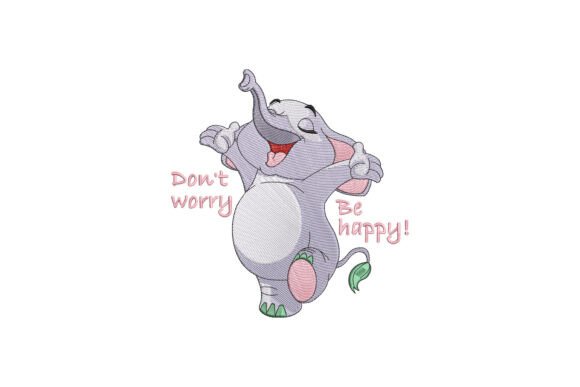
As someone who’s stitched hundreds of animal-themed embroidery files for clients and my own craft business, Don’t Worry Be Happy Funny Elephant landed on my desk just before a rush of custom tote bag orders. I needed something lighthearted, scalable, and instantly recognizable—no overthinking, no design fatigue. This one caught my eye immediately: round ears, a relaxed trunk curl, and that playful, slightly lopsided smile. It doesn’t try to be clever or minimalist—it leans into warmth, whimsy, and approachability. That matters more than you’d think when your customer is buying a baby onesie or a teacher appreciation gift.
Where It Shines (and Where It Doesn’t)
Don’t Worry Be Happy Funny Elephant feels tailor-made for small-to-medium hoop projects where charm outweighs complexity. I tested it on a natural cotton canvas tote bag first—medium-weight fabric, light stabilizer, standard 40-weight thread—and the result was clean, friendly, and legible from six feet away. The lettering stays open and airy; the elephant’s outline uses smooth satin stitch with gentle curves, not sharp angles that snag or distort. That’s critical for custom apparel like sweatshirts or lightweight crewnecks, where dense fill stitches can stiffen the fabric unnaturally.
It also works beautifully as a personalized gift element: I added it to a linen tea towel for a friend’s kitchen renovation—soft contrast, no puckering, and the phrase read clearly even after two machine washes. Same went for a baby bib in organic cotton jersey. Yes, stretchy fabric is tricky—but because the design avoids tight corners and micro-details, it held up better than many “cute animal quote” files I’ve tried.
That said, don’t force it onto curved surfaces like baseball caps without testing. The trunk curl and rounded head shape rely on stable, flat tension. On a structured cap front, the lower curve compressed slightly, softening the smile’s expression. And on dark fabric? I recommend switching to a high-contrast thread combo—cream or pale yellow for the elephant, charcoal gray for the text—not just black-on-black. Otherwise, the cheerful energy gets visually muffled.
Real Use, Real Feedback
Last month, I used Don’t Worry Be Happy Funny Elephant as the hero design for a set of nursery pillow covers sold through my Etsy shop. Buyers loved the vibe: “whimsical but not babyish,” “perfect for a calm, joyful nursery.” One customer even emailed to say her toddler pointed and giggled at the elephant *before* she’d even hung the pillow. That kind of emotional resonance isn’t accidental—it’s built into the proportions, spacing, and rhythm of the layout. The phrase wraps gently around the elephant’s body instead of sitting rigidly below it, which makes the whole composition feel cohesive, not pasted-on.
But here’s what I noticed in production: the small “i” dot and the apostrophe in “Don’t” are tiny—just 1.2mm wide in my test file. On thin fabrics like voile or rayon challis, they vanished unless I bumped up stabilizer thickness or slowed the machine speed. So while this is an easy to stitch machine embroidery design for most users, “easy” assumes basic technique—not beginner-level assumptions. If you’re new to embroidery project prep, treat those fine details like delicate lace: test them, adjust them, and never skip the scrap-fabric run.
Smart Use for Craft Businesses & Creative Entrepreneurs
If you sell handmade products or digital embroidery files, Don’t Worry Be Happy Funny Elephant fits neatly into several profitable niches: holiday embroidery (think Easter baskets or summer picnic totes), small shop product lines (matching aprons + tea towels), and even boutique branding—especially for wellness studios, pediatric offices, or mindfulness-focused brands. Its tone bridges playfulness and sincerity, so it doesn’t feel juvenile next to sophisticated packaging or photography.
For Etsy sellers, I’d pair it with a simple printable mockup showing three variations: light fabric, dark fabric, and textured linen. That builds buyer confidence fast. And if you’re bundling digital assets, consider grouping it with two neutral companion designs—a single elephant icon and a plain “Be Happy” script—to create a flexible design assets pack without overcomplicating licensing.
What to Check Before You Stitch
- Test on scrap fabric first—especially if using textured, stretchy, or dark fabric.
- Review stitch density: too dense = stiff fabric; too sparse = weak definition. This design errs on the lighter side—ideal for apparel but may need reinforcement for heavy-use items like work aprons.
- Confirm hoop size: it’s compact, but verify compatibility with your smallest hoop if you plan to use it on baby clothes or patches.
- Inspect small details: dots, curves, and letter spacing should remain distinct—not fused or frayed—after stitching.
- Try black-and-white mockups to assess contrast and readability before finalizing thread colors.
- Use proper stabilizer: tear-away works well for stable fabrics; cut-away adds durability for knits or frequent-wash items.
- Confirm licensing before selling finished items or reselling the digital embroidery file. Not all Animal Quotes files permit commercial embroidery or digital redistribution.
Final Thought: Personality With Purpose
Don’t Worry Be Happy Funny Elephant isn’t just another embroidery file. It’s a mood-setter, a conversation starter, and a surprisingly versatile machine embroidery design that performs consistently across categories—from embroidered patch to sweatshirt embroidery to baby embroidery. It won’t wow technical purists with intricate fill patterns or experimental applique, and it’s not built for ultra-minimalist branding. But for makers who value clarity, warmth, and real-world reliability? It earns its place in the daily rotation. Just remember: even the happiest elephants need good stabilizer, thoughtful thread choices, and a moment of testing before going live.