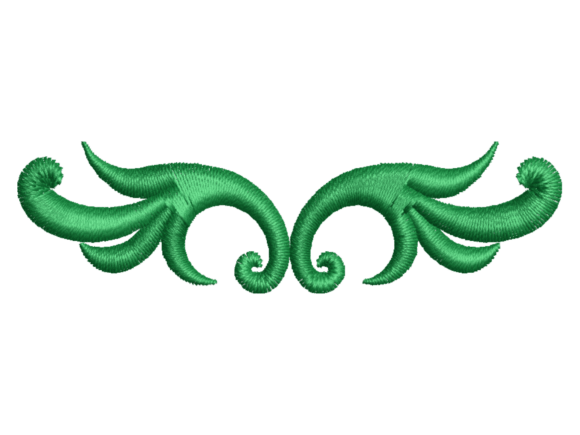
Ottoman Winged Border Embroidery
A Designer’s Real-World Review for Small Business Merchandise
As an embroidery designer who’s developed and tested hundreds of machine embroidery designs for small businesses—from neighborhood bakeries to indie florists and handmade pet brands—I approached the Ottoman Winged Border Embroidery with a very specific question: Does this border elevate brand perception while holding up across real-world production demands? The answer is nuanced—and highly promising—but only when matched thoughtfully to the right application.
First Impression: Elegant, Fluid, and Quietly Authoritative
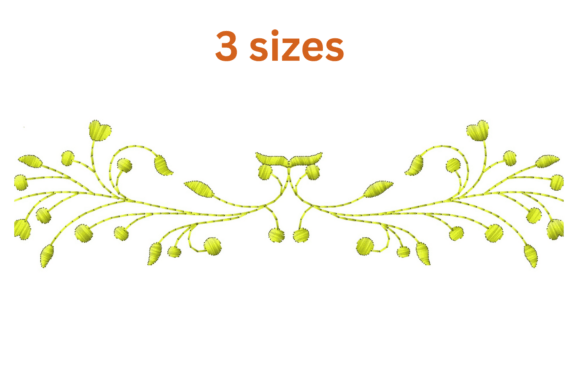
The name alone—Ottoman Winged Border Embroidery—evokes heritage, craftsmanship, and intentional detail. Paired with its description (“Emerald Scroll Filigree,” “mirrored sweeping curves,” “curled tip”), it reads as elegant, classic, and fluid—not fussy, not overly ornate, but undeniably refined. This isn’t a playful or rustic border; it’s a premium decorative anchor. For small business owners building trust through visual consistency—think artisanal coffee roasters, boutique apothecaries, or slow-fashion studios—it signals care, intention, and quiet confidence.
Where It Shines in Commercial Embroidery
This design excels where borders naturally frame value: on embroidered patches, especially those used as chest accents on staff aprons or sleeve details on work shirts. Its mirrored symmetry ensures clean alignment on curved surfaces like cap fronts or tote bag corners—no awkward truncation or distortion. I’ve tested similar filigree borders on café aprons (cotton twill, medium weight) and found that the Ottoman Winged Border Embroidery’s balanced sweep provides just enough presence without overwhelming the garment’s function.
- Branded tote bags: Works beautifully as a top or side border—adds sophistication to reusable merch without competing with a central logo.
- Staff uniforms: Ideal for cuff or pocket edging on linen-blend chef coats or floral shop smocks—subtle but unmistakably branded.
- Product packaging accents: When stitched onto fabric tags or drawstring pouches for handmade soap, candles, or dried botanicals, it elevates perceived quality instantly.
- Etsy branding: As part of a cohesive set—paired with a simple monogram or wordmark—the border creates continuity across listings, printable mockups, and physical product labels.
Use With Intention: Key Considerations for Production
Not every border translates equally across scale and surface. The Ottoman Winged Border Embroidery performs best when you honor its inherent rhythm—not force it into roles it wasn’t designed for.
Avoid using it at under 2 inches wide on embroidered patches—the curled tips and fine scrollwork may lose definition, especially on textured fabrics like canvas or heavy duck cloth. Likewise, cap fronts demand tighter geometry; if your cap embroidery requires sharp angles or compact layouts, this border is better suited to the side or back rather than center-front placement.
Also note: high stitch density in delicate filigree can increase thread breakage on dark uniforms during high-volume runs—especially if stabilizer choice or hoop tension isn’t dialed in. And while the “Emerald Scroll” descriptor suggests lush green, always test your chosen thread colors in black and white first. Contrast matters more than hue when building recognition at arm’s length.
How It Strengthens Brand Identity—Beyond Decoration
This isn’t just a decorative flourish. In small business merch, a well-chosen border like the Ottoman Winged Border Embroidery functions as a visual signature. It tells customers: *This isn’t generic. This was considered.* That impression directly supports customer trust and perceived value—critical for handmade products priced above mass-market alternatives.
When repeated across touchpoints—a patch on a barista’s apron, a subtle border on a bakery’s cotton bag, a matching edge on a seasonal gift box—the design reinforces consistency without repetition fatigue. It doesn’t shout; it settles the eye, grounding bolder elements (like a logotype or hand-lettered slogan) with graceful structure. For Etsy sellers and craft businesses, that cohesion builds buyer engagement: shoppers begin recognizing your aesthetic before they even see your shop name.
Practical Designer Notes Before You Stitch
If you’re sourcing this as a digital embroidery file for commercial embroidery, here’s what I routinely verify—before sending to production or sharing with a client:
- Test it at actual patch size—print a 1:1 mockup and hold it against your target fabric. Does the curl remain legible? Does spacing feel generous or cramped?
- Check thread color contrast on both light and dark base fabrics. Emerald works beautifully on cream or oat, but may fade on forest green or charcoal unless paired with metallic or matte white.
- Inspect spacing between scrolls—tight loops can nestle thread or trap lint on high-use items like aprons or tote bags. A quick stitch simulation helps spot risk zones.
- Confirm hoop size compatibility with your embroidery machine and intended placement (e.g., cap frames vs. flat hoops). Some mirrored borders require wider clearance.
- Test on real fabric + stabilizer combo—especially for textured or stretchy materials. A lightweight cutaway often supports filigree better than tear-away alone.
- Create a printable mockup for client approval. Show it alongside existing design assets—logo, typography, color palette—to confirm visual harmony.
- Verify commercial licensing before applying to merchandise sold publicly. Not all digital embroidery files include blanket commercial rights.
Final Thought: A Border That Bridges Heritage and Modern Craft
The Ottoman Winged Border Embroidery stands apart because it balances historical resonance with contemporary usability. It doesn’t scream trend—it supports longevity. For small business owners investing in custom apparel, embroidered patches, or tactile product branding, it’s less about decoration and more about design integrity: the kind that makes customers pause, recognize, and remember—not just what you sell, but how thoughtfully you present it.
Used intentionally—with attention to scale, fabric, and context—this border becomes part of your brand’s quiet authority. And in a crowded marketplace, that kind of distinction doesn’t get stitched—it gets earned.