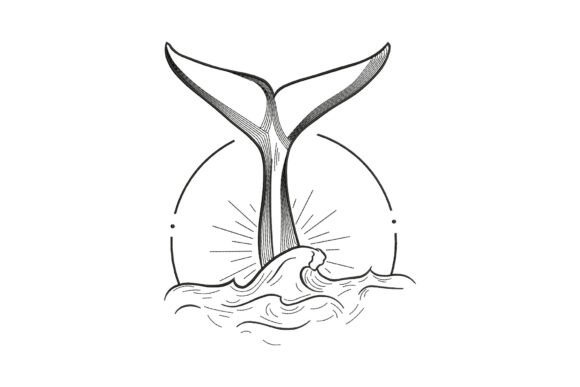
Whale Tail Outline Embroidery Design
A Designer’s First Look: Clean, Contoured, and Quietly Confident
As an embroidery designer who’s developed over 200+ boutique-ready motifs for small apparel brands, my first impression of Whale Tail Outline is immediate and grounded: it breathes space. Not minimalism for its own sake—but thoughtful restraint. The line weight feels intentional, neither too fine to vanish on fleece nor so bold it overwhelms a relaxed sweatshirt silhouette. There’s no fill stitching, no dense satin borders—just a single, fluid contour that traces the elegant curve of a whale’s fluke. That simplicity is its strength. It reads as handmade without shouting; decorative without demanding attention. On neutral heather gray or oatmeal sweatshirts, it lands with quiet sophistication. On deep navy or charcoal hoodies? It becomes a subtle signature—like a whispered brand mark rather than a logo stamp.
How Whale Tail Outline Performs Across Real Boutique Applications
This isn’t just a design—it’s a versatile design asset. For a limited seasonal drop, I’d place Whale Tail Outline centered on the chest of an oversized hoodie: low enough to sit comfortably above the waistband, high enough to read clearly in lifestyle photos. Its clean outline holds up beautifully in printable mockups and Etsy listing thumbnails—no pixelation, no lost detail at 2.5"–3.5" width. On pastel blush or seafoam sweatshirts, a soft ecru or pale taupe thread lifts the shape without contrast fatigue. On dark fabric? A matte black or deep indigo thread lets the form speak through texture—not brightness. And yes—it works as a sleeve accent (left cuff, just below the elbow) or even as a delicate back-of-neck detail on cropped or boxy styles. It never feels “cute” in a juvenile way, nor “bold” in a graphic tee sense. It’s feminine but not fussy, rustic but not rough, playful but never childish. It’s quietly decorative—exactly what modern boutique branding needs.
Practical Considerations for Sweatshirt Embroidery Success
Let’s talk real production. Sweatshirt embroidery demands respect for fabric texture, thickness, and movement—and Whale Tail Outline responds well *if* you honor its nature. Because it’s an outline-only motif, stitch density is inherently low. That’s a win: less thread buildup, less risk of puckering on brushed fleece or French terry. But it also means stabilizer choice matters more. For midweight cotton-blend sweatshirts, a medium-weight cutaway gives clean edges and long-term wash durability. For ultra-soft, lightweight triblends? A lightweight tear-away + topping combo prevents thread sinking into the nap. Hoop size isn’t restrictive—you can easily fit this in a 4x4 hoop, making it accessible for home-based Etsy sellers and small-shop product developers alike. Small-size readability? At 2" wide, the curve remains legible and graceful. Below 1.75", the tip begins to soften—so I’d hold the minimum at 2" for commercial embroidery clarity.
Thread Colors & Visual Trust
Thread color selection directly impacts perceived value. With Whale Tail Outline, contrast isn’t about loudness—it’s about intention. A tonal match (e.g., heather gray thread on heather gray fabric) reads as elevated and tactile. A muted complementary tone (sage on cream, slate on oat) adds quiet depth. Avoid high-sheen threads unless your brand leans luxe—matte or semi-matte polyesters better support the handcrafted feel described in the product copy. This is where buyer trust builds: when the finished product looks exactly like the mockup, with clean lines and consistent texture across every piece. That consistency tells customers your small shop delivers precision—not just charm.
Brand Identity & Customer Engagement
In a crowded digital marketplace, Whale Tail Outline functions as both aesthetic anchor and emotional connector. It belongs to the Marine Mammals category—but it doesn’t shout “ocean theme.” Instead, it evokes calm, motion, and gentle strength—qualities your boutique brand can weave into storytelling, packaging, and social captions. When styled in natural light against linen or wool throws, it enhances lifestyle photography without competing. As a digital embroidery file, it’s easy to pair with coordinating motifs (a single kelp frond, a minimalist wave) to build cohesive design assets. And because it’s outline-based, it scales cleanly across merch—think tote bags, organic cotton tees, or even embroidered patches for jackets. That scalability strengthens visual recognition. Customers begin to associate that smooth, confident curve with your brand’s quiet confidence.
Final Thoughts for Creative Entrepreneurs
If you’re an Etsy seller curating a coastal-inspired capsule, a small clothing brand launching a slow-fashion hoodie line, or an embroidery shop sourcing refined, production-ready motifs—Whale Tail Outline earns its place in your library. It doesn’t try to be everything. It’s not a statement piece, nor a trend-chasing graphic. It’s a considered, repeatable, quietly resonant machine embroidery design that supports your vision instead of overshadowing it. It reinforces handmade product integrity—not through complexity, but through clarity. Use it thoughtfully: choose stabilizer with care, test thread colors on your exact fabric, and always photograph the finished product flat and in natural light. Remember—this is a digital embroidery file meant for real-world wear. Always verify hoop size, file format compatibility, and licensing terms before bulk production. When executed well, Whale Tail Outline doesn’t just decorate a sweatshirt. It elevates the entire small shop product experience—from screen to stitch to shelf.