Colorful Peacock Embroidery Art Png: Craft Fair Verdict
As someone who stitches for a living and spends weekends watching customers browse my craft fair booth, I know the difference between a design that stops people in their tracks and one that gets a polite glance. When I saw the Colorful Peacock Embroidery Art Png – a lavish, ornamental bird illustration with a long flowing tail and an embroidery-style finish – my first thought was not “can I stitch this?” but “where will it outsell everything else on the table?” This review walks through exactly how I’d evaluate this graphic for real handmade products, from a production perspective and a seller’s gut instinct.
First Impression: Opulent, Eye-Catching, and Demanding Attention
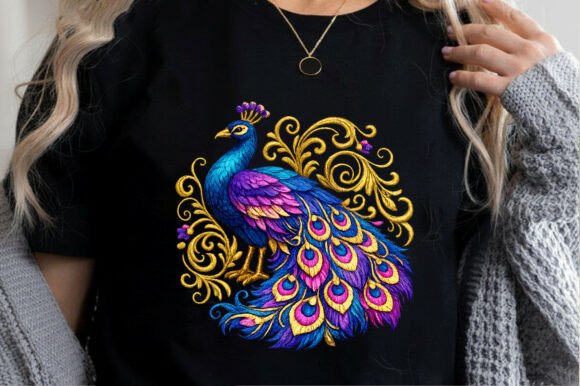
The Colorful Peacock Embroidery Art Png reads as elegant, decorative, and undeniably premium. The description leans into “ornamental,” “colorful,” and “embroidery style illustration,” which tells me the image already mimics the texture of thread. For a craft fair product, that’s a double-edged sword – it promises a rich, layered look, but it also means anyone who sees it will expect a high-end stitched finish if you turn it into an actual machine embroidery design. In a booth full of rustic farmhouse signs and minimalist line art, this peacock would feel like a jewel. It’s not cute, it’s not funny, it’s not soft – it’s confident, vibrant, and meant to be a focal point.
Visual Appeal and Customer Magnetism
At a busy market, shoppers scan quickly. A design that reads clearly from six feet away wins. This peacock, with its long ornamental tail and vivid color palette, has that instant recognition. I can already picture a large tote bag hanging on a rack, catching the light and drawing people in with the promise of something handcrafted and luxurious. The embroidery-style illustration gives it a tactile illusion, which is perfect for selling handmade items because buyers associate texture with quality. When I test a design like this, I always ask: “Does it look like a $30 item or a $60 item?” The Colorful Peacock Embroidery Art Png has the potential to elevate a simple canvas tote or a linen pillow cover into a boutique-level piece, which means healthier margins for my small shop.
Product Pairings: Where It Shines and Where It Might Struggle
Not every blank surface is a good home for this bird. The peacock’s elaborate tail and dense ornamental details need room to breathe. I’d immediately rule out tiny patches or narrow cap brims – the intricacy would mush into a blurry mess of stitches. Instead, I’d plan my booth around larger, flat surfaces that let the design take center stage.
Winning Products for This Graphic
- Large tote bags – The open canvas of a cotton or canvas tote gives the peacock tail space to expand. A full-front placement transforms a basic bag into a statement piece.
- Aprons – A bib apron with the design centered on the chest panel creates a high-end culinary or hostess gift. The long tail can flow downward without interruption.
- Pillow covers – A 16x16 or 18x18 linen or cotton cover with this design becomes an instant home décor item. It photographs beautifully for Etsy listings and feels like a splurge.
- Tea towels – If you choose a smooth, tight-weave towel and position the peacock horizontally, the ornamental tail can run along the bottom edge. This is a classic craft fair seller when done right.
- Fabric pouches – A larger zip pouch or a book-style clutch can showcase the design on the front flap, turning a simple organizer into an art piece.
Products I’d Skip or Rethink
- Small embroidered patches – The tail details will vanish at patch sizes under 3 inches. If you must do a patch, use it as a stylized accent rather than the full illustration.
- Caps – The curved surface and limited embroidery field make this design impractical. The long tail would distort along the seam.
- Thick, textured towels – Terry cloth or waffle weaves will break up fine lines and make the ornate tail look messy. Reserve this for flat-woven fabrics.
Practical Production Notes from an Embroidery Designer
Since the Colorful Peacock Embroidery Art Png is a graphic illustration and not a digitized embroidery file, you’ll need to convert it yourself or hire a professional digitizer. This is where many crafters stumble. The PNG’s embroidery-style appearance can be misleading – it’s a flat image, and turning it into a stitch file requires careful planning. Here’s what I’d do before committing to production.
Digitizing Realities
The peacock’s tail is packed with delicate feather lines, color gradients, and ornamental swirls. In a machine embroidery design, those details translate to high stitch counts, multiple thread changes, and potential for dense areas that pucker lightweight fabrics. I’d request a test stitch-out on a scrap of the exact fabric I plan to use, and I’d watch for these pressure points:
- Dense stitch areas – The central body and upper tail region could become bulletproof if not properly digitized. Ask your digitizer to reduce density in overlapping sections or use open satin stitches for delicate feather filaments.
- Tiny details – Small ornamental dots or fine lines near the tail’s outer edge might not read well in thread. Simplify them if needed, or accept that at a reasonable viewing distance they’ll blend into the overall texture.
- Thread colors – The illustration uses a broad palette. Each color change adds time and cost. I’d limit the embroidery to 8–12 well-chosen shades that maintain the peacock’s vibrancy without becoming a thread-changing marathon.
Stabilizer and Fabric Choices
With a design this dense, you cannot skimp on stabilizer. For tote bags and aprons, I’d use a medium-weight cutaway stabilizer. For tea towels, a fusible no-show mesh prevents shadowing on the front. Always test on a swatch first, and if the fabric has any stretch, add a temporary spray adhesive to prevent shifting during the long stitch run. The peacock tail will expose any hooping instability immediately.
Hoop Size and Placement
The description doesn’t mention dimensions, so I’d measure the PNG’s aspect ratio. A typical peacock with a long tail needs a wide hoop – at least 6x10 inches or larger. If your machine maxes out at 4x4, you’ll have to split the design into multiple hoopings, which is a nightmare for production consistency. Always check the required embroidery area before you fall in love with a graphic.
Booth Display Strategy: Making the Peacock Work for You
I imagine a sunny Saturday morning, my table draped in a neutral linen, and three or four peacock pieces catching the early light. To make the Colorful Peacock Embroidery Art Png the star of the booth, I’d group products by color story. A tote bag, a pillow cover, and a tea towel all featuring the same design create a cohesive mini-collection. Customers who love the peacock but can’t commit to a large item will often buy the smaller tea towel or pouch. I’d also hang a finished tote at eye level, positioned so the long tail hangs downward, and let the natural movement of the fabric mimic the flow of a real bird’s tail. That subtle motion is a proven attention-grabber.
Photography and Online Listing Potential
For Etsy sellers and digital product creators, the Colorful Peacock Embroidery Art Png offers a huge advantage: it photographs like a dream. The embroidery-style texture gives it depth even in flat lays, and the vibrant colors pop against light backgrounds. I’d use a printable mockup – placing the PNG on a blank tote or pillow image – to test how the design looks before stitching. But remember, an actual embroidered product will have a slightly different feel; the thread reflects light, and the texture changes the color saturation. Always create at least one real, finished product to photograph for your listing. Buyers trust real stitches more than digital mockups.
Commercial Use and Licensing Reality Check
Here’s a non-negotiable step: before you sell a single item, verify the commercial license attached to the Colorful Peacock Embroidery Art Png. The product category is ‘Illustrations’ and type is ‘Graphics’, so it’s likely sold as a design asset. That means you need to ensure you have permission to create physical products for resale, and to digitize the artwork for embroidery. Some licenses restrict the number of finished items or require extended terms for machine embroidery. If the license details aren’t spelled out in the description, assume nothing and contact the seller. I’ve seen too many craft fair vendors get burned by assuming a PNG is free-for-all.
Final Designer Notes for the Craft Fair Table
If I were building a product line around the Colorful Peacock Embroidery Art Png, I’d treat it as my premium showpiece. I’d produce a limited run of 10–15 high-quality items, price them at a point that reflects the stitch time and thread work, and display them as the “artist’s collection” of my booth. The design’s ornamental nature and embroidery-style finish align perfectly with the handmade, high-value aesthetic that today’s boutique shoppers crave. It’s not a quick and dirty design; it demands respect, and that respect translates into buyer confidence. With the right digitizing, thoughtful fabric choices, and a show-stopping booth display, this peacock could become your signature craft fair product.